
Southill Estate and RESTORE: WildSense multi-taxa monitoring
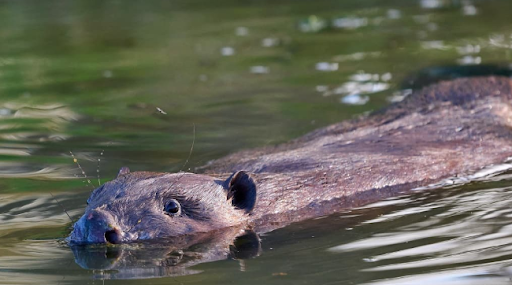
Southill Estate is an 11,000 acre estate comprising a mosaic of grassland, woodland, farmland, and wetland habitats located in Bedfordshire. Traditionally, the estate has been used extensively for conventional game bird shooting and intensive farming. In time, these activities detrimentally impacted the estate and sent the biodiversity of the estate into a decline. In an effort to combat this, in 2021 the Southill Estate restoration project was born. A groundbreaking initiative, the restoration project illustrates a concerted, dedicated effort on behalf of the estate to reverse the detrimental impact that traditional activities were having on biodiversity in the area. The estate has partnered with RESTORE to implement a private natural capital model that funds conservation through biodiversity net gain and carbon tracking. In February 2026, the project hit a momentous milestone: beavers were reintroduced to the land for the first time in 400 years.
Who is RESTORE?
Founded on the belief that nature recovery should be a mainstream land-use and investment strategy, RESTORE is a naturalist-led ecological restoration company operating across Britain. The organization partners with landowners, businesses, and institutional investors to design, fund, and deliver ambitious, large-scale nature recovery initiatives that blend ecological integrity with economic profitability.
Central to how they make that work financially is what RESTORE calls a "wilder economy": bringing landowners, investors and businesses together around real, measurable ecological outcomes, so that restoration becomes something the market rewards rather than something landowners have to fund out of goodwill alone.
"At Restore, we work with landowners to manage holistic, large-scale ecosystem restorations across a portfolio of sites in the UK [...] we're creating opportunities for nature to thrive and to demonstrate measurable uplift in bioabundance and biodiversity." - Dr Iain Malzer, Principal Restoration Ecologist, RESTORE
More than a silo.
Southill’s restoration journey is representative of a wider movement of land-owners and farmers increasingly adopting nature-friendly practices. With the introduction of legislation such as the 2021 Environment act, Biodiversity Net Gain, and other voluntary frameworks such as TNFD (Task-force on Nature-related Financial Disclosures), all push towards targets of easing human impact on nature and, instead, fostering restoration and regeneration. Moreover, whilst this myriad of policy, legislation, and governing bodies is varied and contrary in many ways, they all share one defining quality - they require data.
Why measure rather than assume?
Data is undoubtedly vital to the field of restoration ecology and sustainability. Outside of merely representing a requirement for reporting, (although it often is), data enables landowners to critically understand and assess the state of their natural environment. Through understanding their biodiversity, landowners are equipped with the tools to actively, and effectively, invest in their nature. Without the data, landowners are operating blindingly on land that they don’t understand. At Southill, the key to unlocking this data are Wilder Sensing’s WildSense units.
“Robust data collection and analysis inform our ongoing adaptive management approaches. Quantifying how key functional groups respond and adjusting our approach accordingly is critical to the success of our restorations.”— Dr Iain Malzer, Principal Restoration Ecologist, RESTORE
An image illustrating the data analytics dashboard. An interactive tool, the analytics dashboard automatically updates and is filterable for a variety of factors.
What the WildSense units are being used for
WildSense brings together multi-taxa acoustic and image-capture monitoring, (bird, bats, and moths) into a single cloud dashboard, rather than requiring separate tools and manual reconciliation for each taxa group. For a project like Southill, working on large landscapes, decade long timelines, and multiple functional groups, that consolidation is what turns raw recordings into a dataset RESTORE can act on and stand behind. Each WildSense unit consists of two devices; an acoustic recorder to monitor bird and bat calls and a camera to assess moth biodiversity. By co-locating the two devices, Wilder Sensing’s Wild Sense Units offer a multi-taxa approach to remote biodiversity monitoring. This will enable RESTORE to holistically assess biodiversity across the Southill Estate site.
"WildSense offers us the technical backbone: supporting our audio logger and moth sense deployments, running the data through automated bird and bat ID processing, and critically, hosting it all in one place. That last part is the key for us — with the volumes of data we are gathering, having clean, consistent, accessible data is critical."— Dr Iain Malzer, Principal Restoration Ecologist, RESTORE
The WildSense cohort
More than just a product, one key element included in Wilder Sensing’s WildSense units is a systemic approach to fostering nature restoration. RESTORE is part of a wilder WildSense cohort of forward-thinking, nature conscious companies. This cohort is designed to foster collaborative change across the sector.
The Wilder Sensing, Southill Estate, and Restore team pictured whilst installing WildSense hardware.
"I've spent my career chasing good ecological data. Having a steady, standardised stream of it coming in from across our restoration projects, accessible at any time to inform our management, is really exciting." — Dr Iain Malzer, Principal Restoration Ecologist, RESTORE
Related posts
Sustain.AI Reception at the House of Lords
Wilder Sensing is proud to be one of ten pioneering startups in this years cohort who are leveraging AI to tackle pressing sustainability challenges.